


Transforming Self-Doubt into Spiritual Strength with the Bhagavad Gita
Introduction
In today’s fast-paced world, low self-esteem has quietly become one of the most pervasive struggles. Whether it’s due to comparison, criticism, failure, or even early-life trauma, the inner voice can often turn into our harshest critic. And yet, 5,000 years ago, on the battlefield of Kurukshetra, Shree Krishna addressed this very crisis—not in psychological jargon, but in eternal truths that cut through doubt and awaken confidence.
The Bhagavad Gita is not just a spiritual scripture—it’s a manual for self-mastery. When Arjun, the valiant warrior, was consumed by fear, self-doubt, and an identity crisis, Shree Krishna didn’t shame him. Instead, he compassionately guided him back to his divine nature. Let us explore how Shree Krishna’s words help heal low self-esteem, strengthen identity, and unlock inner courage.
1. You Are Not This Body—You Are the Eternal Soul
Bhagavad Gita 2.13
👉 Read verse
“Just as the embodied soul continuously passes from childhood to youth to old age, similarly, at the time of death, the soul passes into another body. The wise are not deluded by this.”
Insight
This verse is foundational in realigning our identity. Low self-esteem often comes from misidentification with the body or temporary labels—“I’m not attractive,” “I’m not smart enough,” “I don’t fit in.” These statements are all rooted in the ego’s perception of self as limited.
But Shree Krishna gently lifts the veil: You are not your face, your bank account, your job, or even your thoughts. You are an eternal, indestructible soul merely passing through this body and life stage like changing clothes. When you realize this, self-esteem no longer hinges on worldly parameters. It becomes rooted in the sacred.
2. Your Mind Can Be Your Friend or Your Enemy

Bhagavad Gita 6.5
👉 Read verse
“Elevate yourself through the power of your mind, and not degrade yourself, for the mind can be the friend and also the enemy of the self.”
Insight
Have you ever caught yourself saying: “I’m so stupid,” “I always mess up,” or “No one will ever respect me”? These inner scripts, when repeated, become self-fulfilling beliefs. Shree Krishna says the mind is both your greatest tool and your worst enemy. It can either lift you to divine heights—or drown you in self-created misery.
Training the mind is not about suppressing thoughts but becoming aware of its tendencies. Through daily reflection, meditation, and self-kindness, we learn to stop identifying with the mental noise and instead guide it—like a charioteer steering wild horses. A well-directed mind restores healthy self-worth and inner quiet.
3. You Are Meant to Act—Not to Worry About the Outcome

Bhagavad Gita 2.47
👉 Read verse
“You have a right to perform your prescribed duties, but you are not entitled to the fruits of your actions. Never consider yourself to be the cause of the results of your activities, nor be attached to inaction.”
Insight
Most self-esteem issues come from a performance-based mindset. We judge our worth based on success, grades, accolades, or people’s opinions. But Shree Krishna introduces a radical idea: focus only on your effort. The moment you surrender your obsession with results, pressure melts.
Whether you succeed or fail, your worth remains constant when measured by sincerity, not outcome. When we embody this truth, we become fearless. We speak up even if our voice shakes. We take risks without fearing judgment. We stop basing our identity on applause.
4. You’re Not Here to Impress—You’re Here to Express Your Nature
Bhagavad Gita 3.33
👉 Read verse
“Even wise people act according to their natures, for all living beings are propelled by their natural tendencies. What will one gain by repression?"
Insight
Self-esteem often crumbles under comparison. We try to be like others, copy their path, or meet unrealistic societal expectations. But Shree Krishna emphasizes that every soul is born with a unique nature (svabhava). You are not here to fit someone else’s mold—you are here to express your authentic self.
When you choose paths, careers, or relationships aligned with your true temperament and values, you blossom. When you suppress your nature to conform, you suffer. True self-esteem is built not from imitation, but from acceptance and expression of your natural strengths and tendencies.
5. Don’t Let the Modes of Nature (Gunas) Pull You Down

Bhagavad Gita 14.22–25
👉 Read verse
“The Supreme Divine Personality said: O Arjun, The persons who are transcendental to the three guṇas neither hate illumination (which is born of sattva), nor activity (which is born of rajas), nor even delusion (which is born of tamas), when these are abundantly present, nor do they long for them when they are absent. They remain neutral to the modes of nature and are not disturbed by them. Knowing it is only the guṇas that act, they stay established in the self, without wavering.”
Insight
The three gunas—sattva (clarity), rajas (restlessness), and tamas (inertia)—shape how we think, act, and feel. A tamasic mind feels sluggish, unworthy, and pessimistic. A rajasic mind chases validation and crashes into anxiety. Most of our low self-esteem episodes come from these imbalances.
Shree Krishna teaches us not to identify with these states, but to observe and transcend them. By improving our habits—clean diet, regular routine, association with spiritual people—we invite sattva. A sattvic lifestyle naturally fosters confidence, clarity, and joy. You're not your mood. You’re the one who witnesses and transforms them.
6. Your Relationship with the Divine Gives You Inner Strength
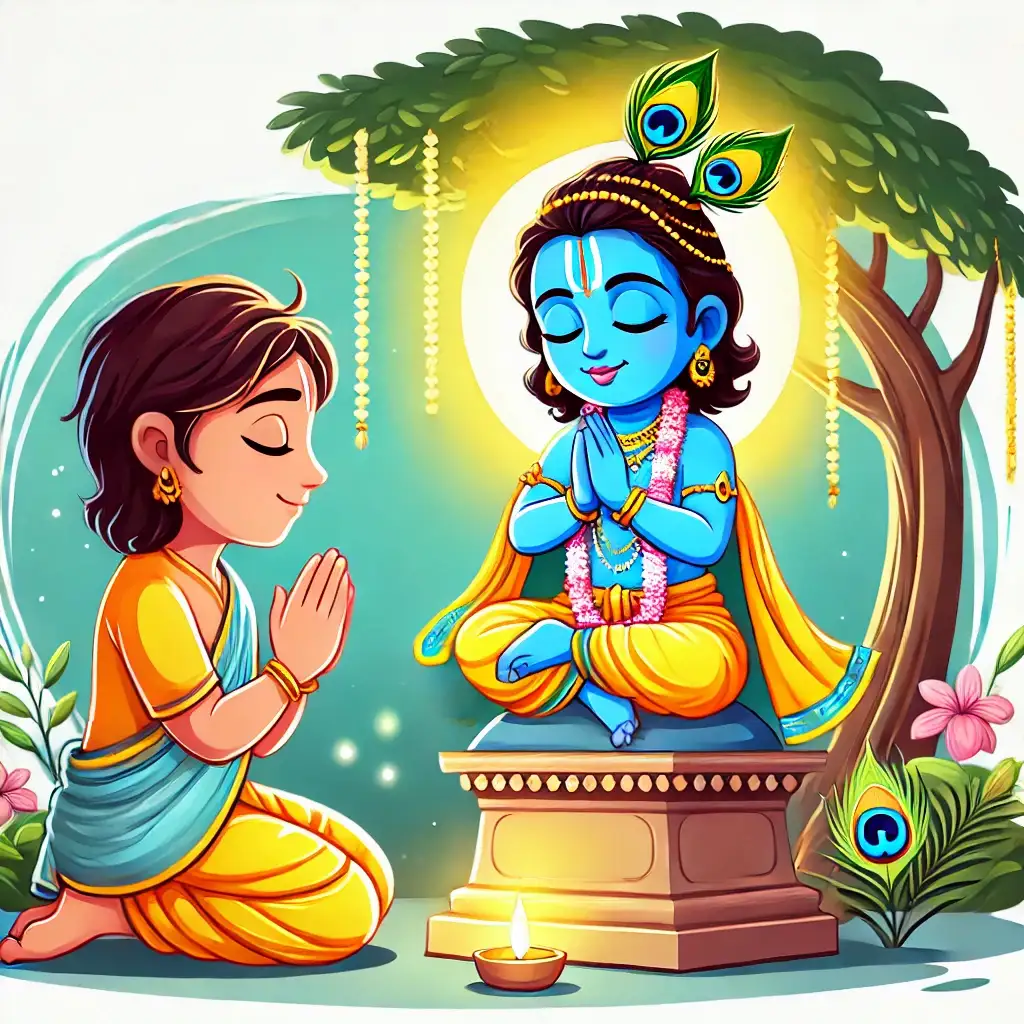
Bhagavad Gita 9.22
👉 Read verse
“There are those who always think of Me and engage in exclusive devotion to Me. To them, whose minds are always absorbed in Me, I provide what they lack and preserve what they already possess.”
Insight
What if your self-worth came not from how others see you—but how deeply you are loved by the Divine? Shree Krishna says that for those who are devoted, He personally provides the clarity, courage, and direction they need.
When your inner worth is rooted in love for God and His love for you, no external rejection can shake it. Devotion is the deepest healing balm—it dissolves shame, guilt, and self-judgment. Through prayer, service, chanting, or reflection, you begin to feel you matter—not because of status, but because you are divinely connected.
7. Let Go of the Burden—Surrender to Krishna
Bhagavad Gita 18.66
👉 Read verse
“Abandon all varieties of dharmas and simply surrender unto Me alone. I shall liberate you from all sinful reactions; do not fear."
Insight
At the heart of low self-esteem is often a sense of shame: “I am not enough. I’ve messed up. I don’t deserve love or peace.” Shree Krishna lovingly removes that weight. He says: surrender everything—even your brokenness—and He will carry you.
Surrender doesn’t mean giving up. It means giving over—handing your burdens, confusion, and sense of unworthiness to a Higher Power. When you stop trying to “fix yourself” and instead open your heart to divine grace, real healing begins. You realize: you were never broken. Just disconnected from the light within.
Summary Table: Healing Self-Esteem Through Gita Wisdom
| Teaching from the Gita | Real-Life Application |
|---|---|
| You are the eternal soul (2.13) | You are not defined by external appearances or labels |
| Mind is friend/enemy (6.5) | Master your thoughts—don’t let them master you |
| Do your duty, not for results (2.47) | Focus on effort, not approval. Detach from outcomes |
| Follow your nature (3.33) | Embrace your uniqueness; don’t compare your path to others |
| Rise above the gunas (14.22–25) | Improve lifestyle habits to shift from tamas/rajas to clarity and self-worth |
| Devotion brings strength (9.22) | Spiritual love is a more stable source of esteem than praise |
| Surrender to Krishna (18.66) | You don’t need to carry guilt or shame—surrender it and heal |
FAQs: Self-Esteem and Spiritual Growth
- How is self-esteem different from ego?
Ego says, “I’m better than others.” True self-esteem says, “I am enough because I am a divine soul.” The Gita teaches humility and inner strength—not arrogance. - What if I feel unlovable or unworthy?
Shree Krishna never rejects anyone. His love is unconditional (9.22). You are eternally worthy, just by existing as a soul connected to Him. - How can I stop comparing myself to others?
Focus on your svabhava—your true nature (3.33). What’s right for someone else may not be right for you. Water your own garden. - I keep criticizing myself. How do I stop?
Replace negative self-talk with Gita affirmations: “I am the soul,” “My mind is my friend,” “God loves me.” These truths purify thinking. - What if I feel too broken to be spiritual?
Shree Krishna loves the surrendered heart. Even if you feel broken, surrender that feeling (18.66). He will heal what you offer. - Can self-esteem be built without achievements?
Absolutely. The Gita teaches effort over outcome. Your worth is not in success—but in your sincerity and intention. - How does devotion improve confidence?
When you realize the Supreme is walking with you, you stop feeling alone. Devotion dissolves fear and awakens inner courage. - Is self-esteem a spiritual quality?
Yes—when it’s rooted in truth, not ego. It helps you fulfill your dharma, serve others, and connect with the Divine fully. - How can I strengthen my mind?
Start with daily spiritual practice: meditation, reading, chanting. Over time, your mind becomes your biggest ally (6.5). - What’s one Gita quote I can repeat daily to feel better about myself?
Try this affirmation from 2.13: “I am the eternal soul, untouched by change, ever full of light.”
Resources for Further Study