


In a world overflowing with distractions, inner turmoil, and spiritual confusion, timeless wisdom from ancient scriptures shines like a beacon. Among these, the Srimad Bhagavatam—one of the most revered texts in Sanatan Dharm—stands as a profound guide to spiritual awakening.
In a captivating discourse, Swami Mukundananda delves deep into the Srimad Bhagavatam, addressing six fundamental questions that have intrigued sages and seekers alike. These are not just philosophical ponderings but deeply relevant concerns for anyone on the path of inner growth.
📜 The Setting: 88,000 Sages Seek the Truth
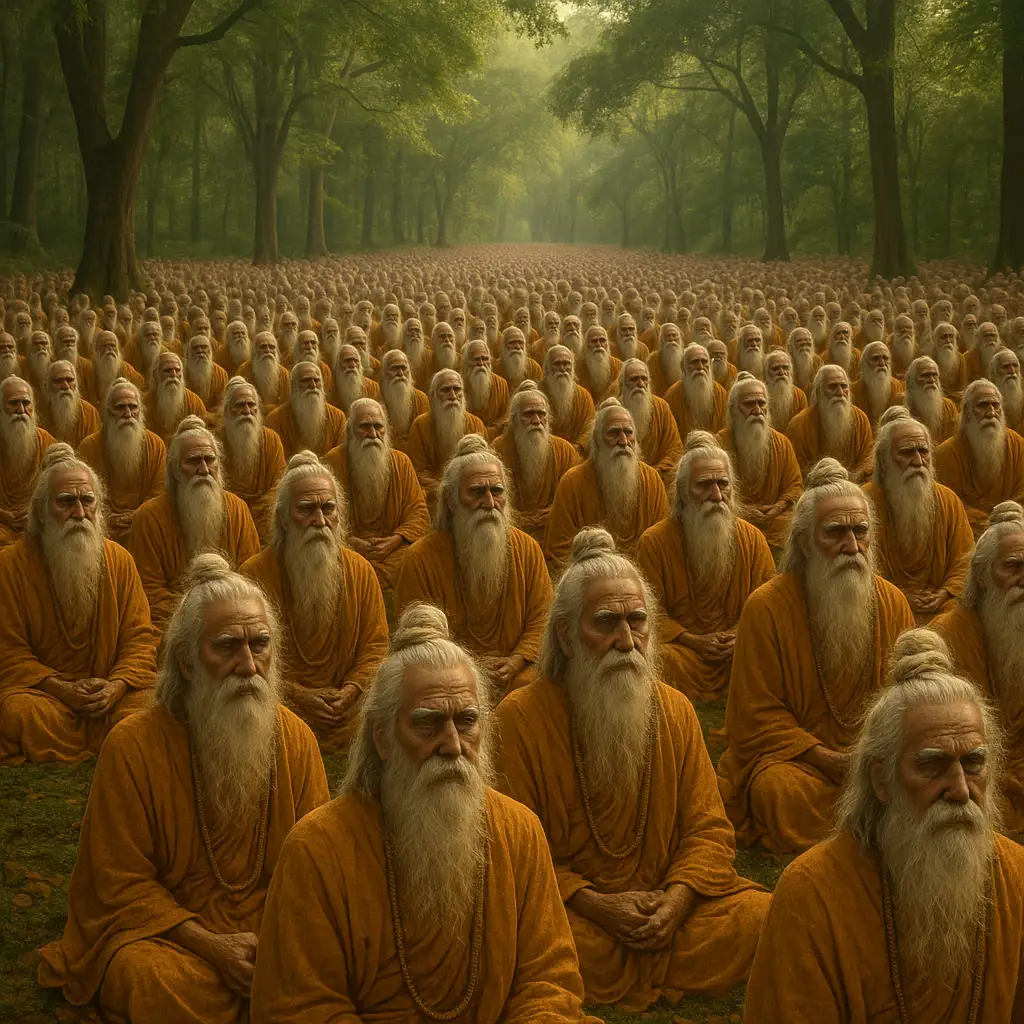
Nearly 4,900 years ago, in the sacred forest of Naimisharanya, 88,000 sages gathered to discuss the spiritual decline in the age of Kali. The respected Shaunak Rishi posed six vital questions to Suta Goswami, who was chosen as the Vyas (teacher) of that congregation.
These questions form the foundation of the Srimad Bhagavatam and are just as crucial today:
- What is the means of attaining welfare in this age of Kali?
- What is the essence of all Vedic scriptures?
- Why did Shree Krishna descend to Earth?
- What are the divine pastimes (leelas) of Lord Krishna?
- Who are the other Avatars of the Supreme Lord?
- After Shree Krishna’s departure, where did Dharma take shelter?
🙏 Question 1: How Can We Attain Welfare in Kali Yuga?
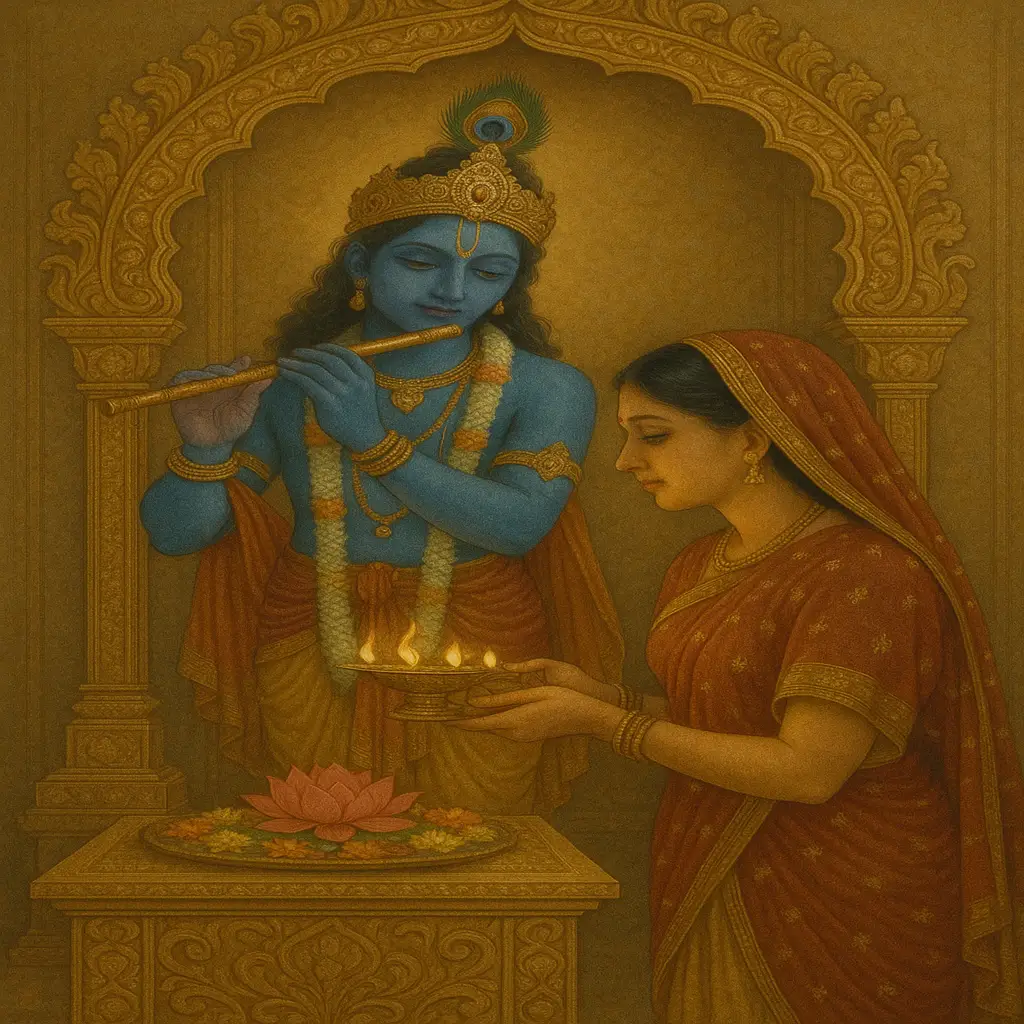
The first question is deeply relevant in today's chaotic world.
Suta Goswami replies that in this age of endless distractions and defects, selfless and uninterrupted devotion (Bhakti) to the Supreme Lord is the ultimate solution. You don’t need advanced yogic techniques or esoteric practices.
🔑 Key Insight:
"Love God without motive or expectation. That selfless devotion is the true Dharma."
Swami Mukundananda explains that Bhakti Yog is the simplest and most accessible path for all, regardless of background, intellect, or spiritual lineage.
📚 Question 2: What is the Essence of All Scriptures?
The Vedas, Puranas, Upanishads—so many sacred texts. What unifies them?
वदन्ति तत्तत्त्वविदस्तत्त्वं यज्ज्ञानमद्वयम् ।
ब्रह्मेति परमात्मेति भगवानिति शब्द्यते ॥ (SB 1.2.11)
Suta Goswami shares that the one fundamental truth behind all scriptures is the realization of the Supreme Divine Entity—God. This entity appears in three manifestations:
- Brahman – The all-pervading energy.
- Paramatma – The indwelling Lord in every being.
- Bhagavan – The personal form of God who performs divine pastimes.
And, the Aim of all the scriptures is to take you closer to God.
Just as different medications have the same goal (healing), all scriptures aim to lead the soul to union with God. Rituals, austerity, or intellectual gymnastics are intermediate steps.
👑 Question 3: Why Did Shree Krishna Descend?
Suta Goswami quotes from the Bhagavatam:
"शृण्वतां स्वकथाः कृष्णः
पुण्यश्रवणकीर्तनः
हृद्यन्तःस्थो ह्यभद्राणि
विधुनोति सुहृत्सताम्" (SB 1.2.17)
The Lord descended for a divine reason—to give us an accessible path to Bhakti. Without his avatar, how would we know of His name, form, leelas, or abode? Meditation on a formless God is hard, but Shree Krishna’s playful and loving form makes devotion easier.
🎭 Question 4: What Were Shree Krishna’s Divine Leelas?
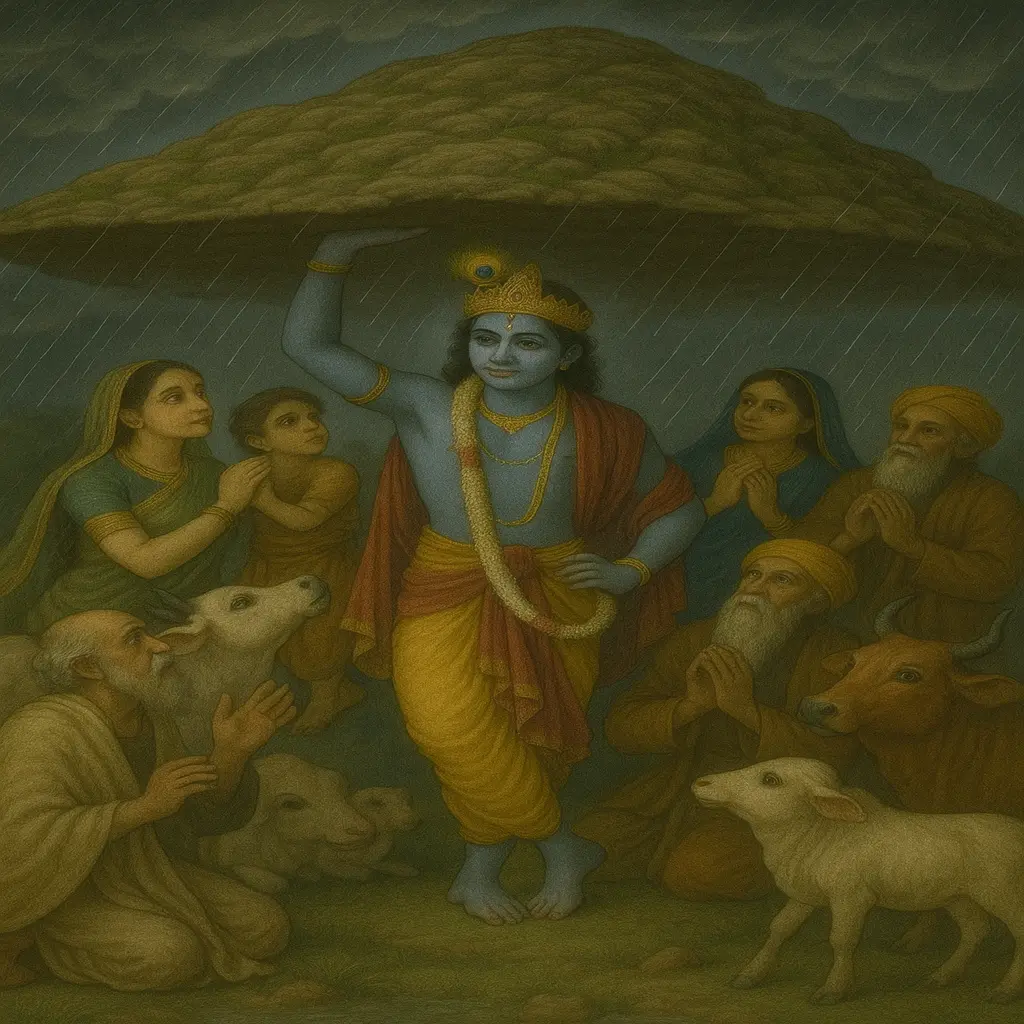
Swami Mukundananda explains that the entire Bhagavatam is rich with Shree Krishna’s divine pastimes—from his miraculous childhood, lifting Govardhan Hill, to the Ras Leela with gopis.
These stories are not mere mythology. They are tools for meditation, channels for love, and keys to liberation.
“Every Leela is a doorway to deeper love and surrender,” says Swami Mukundananda.
🌈 Question 5: Who Are the Other Avatars of the Lord?
The Srimad Bhagavatam elaborates on the many Avatars (divine descents) of God, each appearing for a specific cosmic purpose.
Some notable ones:
- Sanat Kumaras – Eternal child sages.
- Varaha Avatar – Rescued Earth from cosmic ocean.
- Narasimha Avatar – Half-man, half-lion form to protect Prahlad.
- Vaman Avatar – Dwarf form who humbled King Bali.
- Parashuram, Rama, Balaram, Krishna – Each with unique divine missions.
- Buddha – Predicted 2,500 years before his birth.
- Kalki – The future Avatar who will come at the end of Kali Yuga.
These incarnations are not just tales—they reveal God’s multifaceted nature and compassion for creation.
🕉 Question 6: Where Did Dharma Go After Krishna’s Departure?
With Shree Krishna’s departure from Earth, the sages were worried. Where would righteousness (Dharm) take shelter?
The answer: In the Srimad Bhagavatam itself.
This text, glowing like the sun, continues to illuminate the path for humanity, guiding us through the fog of Kali Yug.
📘 How the Srimad Bhagavatam Reached Us: A Divine Lineage
Swami Mukundananda narrates the sacred transmission of the Bhagavatam:
- Ved Vyas wrote the scriptures but felt incomplete.
- Narad Muni advised him to write about pure, selfless Bhakti.
- Shukadev, Vyas’s renounced son, heard it from his father.
- Suta Goswami received it from Shukadev and shared it with the sages.
This lineage ensures the Bhagavatam is not theoretical. It's realized knowledge, passed through souls deeply immersed in God-consciousness.
🧭 Practical Applications of the Srimad Bhagavatam Teachings
The Srimad Bhagavatam isn't just a spiritual epic—it's a living guide for personal growth, emotional resilience, and divine connection. Below are key teachings from the six questions and their real-world applications:
| Teaching | Practical Application in Daily Life |
|---|---|
| Selfless and Uninterrupted Bhakti is the highest dharma | Practice daily prayer, chanting, or meditation without seeking rewards—just pure love for God. |
| All scriptures aim to realize God in personal or impersonal form | Focus on God-consciousness over ritualism. Use scripture as a means, not an end. |
| Krishna’s Avatar provides an accessible form of God | Meditate on His name, form, virtues, and pastimes to stabilize the mind and heart. |
| Divine Leelas are tools for spiritual upliftment | Reflect on Krishna’s stories as symbolic life lessons—humility, courage, love, and detachment. |
| God manifests in many forms to guide us | Be open to divine intervention in unexpected forms or people in your life. |
| Dharma now resides in Srimad Bhagavatam | Study or listen to Bhagavatam regularly to realign with truth and righteousness. |
| Guru-disciple lineage is vital for transmission of wisdom | Respect and seek guidance from realized souls or authentic spiritual teachers like Swami Mukundananda. |
| Bhakti transcends caste, intellect, or social status | Encourage spiritual inclusivity—everyone is eligible for God's grace through devotion. |
| Faith and detachment enhance meditation | Detach from material expectations; meditate with a pure and surrendered heart. |
📺 Watch the Bhagavatam Series – Chapter 2 by Swami Mukundananda
Want to experience the full depth and bliss of this teaching?
👉 Watch here: Bhagavatam Series – Chapter 2 by Swami Mukundananda
Let the divine vibrations of this series fill your heart with joy and clarity.
📣 Subscribe for More Transformational Wisdom!
🧘♂️ Transform your life with spiritual knowledge and guided wisdom.
👉 Subscribe to Swami Mukundananda’s YouTube Channel now!
🎥 Click here to Subscribe
Join a global community of seekers growing in devotion, self-realization, and joy.
❓ Frequently Asked Questions (FAQ)
What is Srimad Bhagavatam?
It is a sacred Hindu scripture composed by Ved Vyas, focusing on Shree Krishna’s divine leelas, teachings, and the path of Bhakti Yog.
Why is Srimad Bhagavatam important in Kali Yug?
It is considered the essence of all Vedic knowledge, specifically meant for guiding people during the spiritually degraded Kali Yug.
Who is Swami Mukundananda?
He is a world-renowned spiritual teacher, founder of JKYog, and an authority on Bhakti Yoga, integrating Vedic wisdom with modern wellness practices.
How many avatars of Vishnu are described in Srimad Bhagavatam?
The Bhagavatam lists 24 prominent Avatars, including Krishna, Rama, Narasimha, and future Avatar Kalki.
Where can I watch more talks by Swami Mukundananda?
You can watch his full library of teachings on his official YouTube channel:
🎥 Swami Mukundananda on YouTube
Is the Bhagavatam relevant for modern life?
Absolutely. Its timeless questions and answers offer guidance on how to live ethically, spiritually, and joyfully—even amidst modern chaos.
🌺 Final Thoughts
The six questions from the Srimad Bhagavatam are not relics of an ancient past—they’re calls to awaken in the present moment.
Through the voice of Swami Mukundananda, we hear not just philosophy but the living pulse of divine truth.
If you are seeking clarity, purpose, and joy, this wisdom is your invitation.


