


One of the most profound Bhagavad Gita lessons we often miss is the value of staying humble. Humility stands as the life-blood virtue among these spiritual lessons and unlocks the door to genuine inner growth.
Understanding the Self: The Foundation of Humility

Understanding humility from a spiritual view requires us to explore the basic teachings about our true nature. The Bhagavad Gita gives an explanation of this question that builds the foundation for authentic spiritual growth.
The eternal nature of the soul
The Bhagavad Gita teaches us something revolutionary about our identity: we are not the temporary physical body but eternal spiritual beings. Chapter 2, verse 20 captures Shree Krishna's words:
"The soul is neither born, nor does it ever die; nor having once existed, does it ever cease to be. The soul is without birth, eternal, immortal, and ageless. It is not destroyed when the body is destroyed."
Learning about our eternal nature becomes the first step toward genuine humility because it changes our sense of identity away from temporary bodily features and achievements.

Why ego arises from bodily identification

"Ahankāra" (translated as "egotism") is the Sanskrit term that refers to the subtle element through which we mistake our identity with our physical body and mind. This false sense of identity creates an illusion of being separate from God and others, which leads to pride and spiritual blindness.
This 'false ego' grows when we mistake the temporary body for our true self. The Bhagavad Gita (3.27) makes this clear:
"All activities are carried out by the three modes of material nature. But in ignorance, the soul, deluded by false identification with the body, thinks of itself as the doer."
This misplaced sense of doership becomes pride's root cause.
False ego shows up in three main ways:
- Grandiosity – Making us believe we're extraordinary and entitled to success
- Blame – Protecting itself by finding scapegoats when we fail
- Shame – Imploding and making us feel worthless when we can't find someone to blame
These three forms pull us away from others and our true spiritual nature, creating needless suffering.
Swami Mukundananda's words ring true: "The moment you think you are humble, you have lost your humility. True humility comes from realizing God is everything, and I am nothing but His servant". This paradox shows why self-awareness must come before genuine humility—we need to know who we truly are before we can exceed the false self.
Life's inherent challenges—birth, death, old age, and disease—help us develop a realistic view that counters pride. We naturally develop the humility needed for spiritual growth by recognizing our vulnerability and dependence on forces beyond our control.
Acting Without Pride: Lessons from Karm Yog
The Bhagavad Gita shows a groundbreaking way to act that serves as the life-blood for developing genuine humility. Many spiritual traditions suggest withdrawing from worldly activities. Shree Krishna, however, offers a different path where worldly activities become a vehicle for spiritual growth.
What is Karm Yog in the Bhagavad Gita?
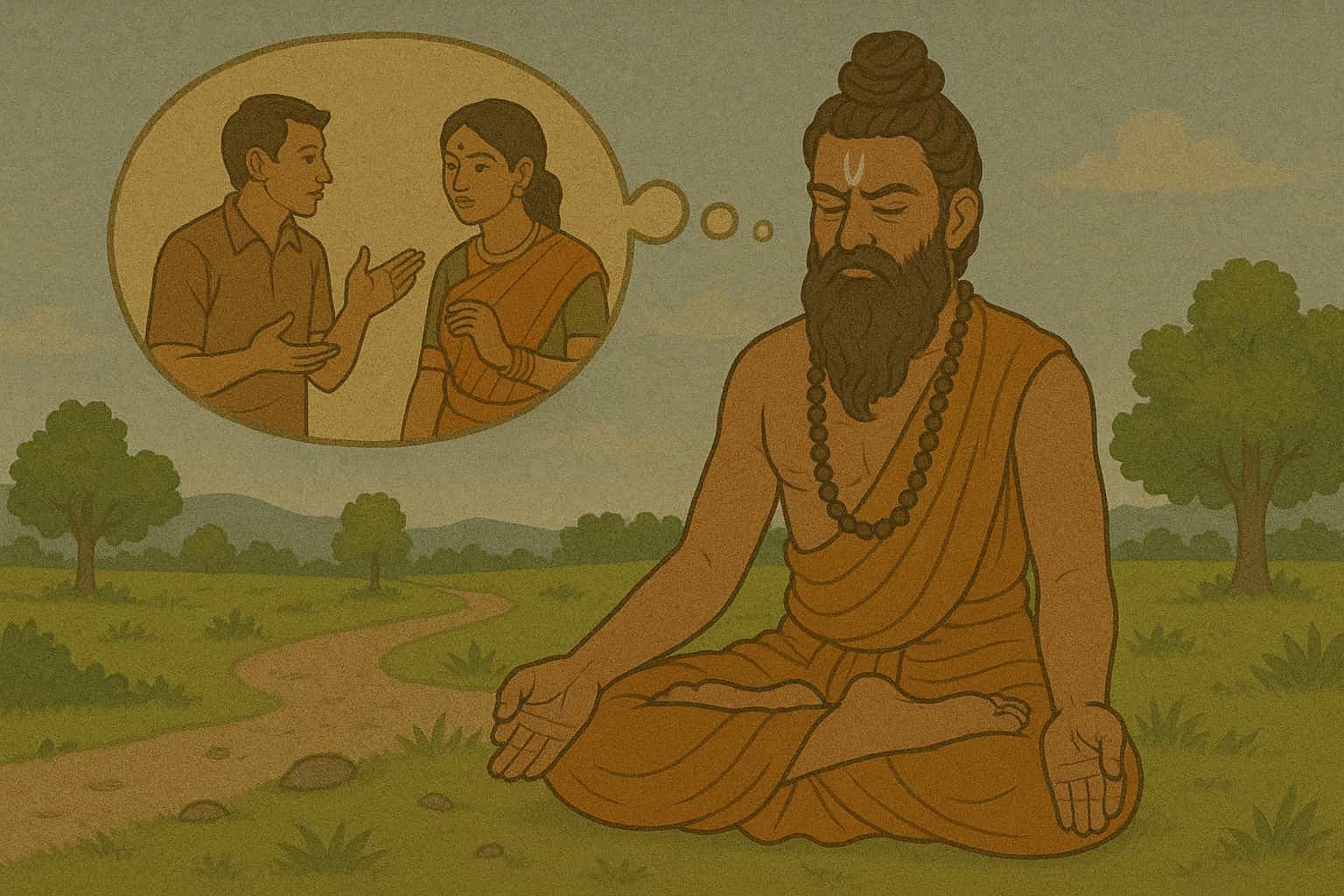
Karm Yog, or the "Path of Action," stands as one of three classical spiritual paths in the Bhagavad Gita. This path emphasizes doing your duties without attachment to results. You could also call it the yoga of selfless action—where work transforms into worship.
Lord Krishna's teaching captures the heart of Karm Yog: "Do your duty without concern for the fruits of it." This path doesn't promote inaction or running away from responsibilities. Shree Krishna makes this clear in verse 3.4:
"One cannot achieve freedom from karmic reactions by merely abstaining from work, nor can one attain perfection of knowledge by mere physical renunciation."
Karm Yog turns everyday actions into spiritual practice by shifting our inner motivation. We perform our duties as an offering to the Divine instead of working for personal gain.
Performing duties without attachment
The famous verse 2.47 reveals the deepest teaching of Karm Yog. Shree Krishna says:
"You have a right to perform your prescribed duties, but you are not entitled to the fruits of your actions. Never consider yourself to be the cause of the results of your activities, nor be attached to inaction."
Results don't depend solely on our efforts. Multiple factors shape outcomes—our efforts, past karmas, God's will, others' efforts, and luck. Result-focused thinking breeds anxiety and disappointment. Action-focused thinking improves performance.
How humility grows through selfless action

Karm Yog naturally dissolves pride by removing its main fuel—attachment to doership. The ego loses its grip on our consciousness when we act without claiming ownership of results.
Working without personal motivation makes us better at what we do and deepens our commitment. A surgeon operates skilfully with detachment and equanimity. We can excel the same way by focusing on action rather than outcomes.
Faith and Devotion: Humility in Relationship with God
Devotion changes our connection with God in ways that pure intellect cannot match. The Bhagavad Gita shows us the path of bhakti (devotion) after we become skilled at controlling our actions and thoughts. This spiritual journey lets humility grow naturally through our connection with God.
Why devotion requires surrender of ego
Bhakti yoga's core lies in complete surrender—not asking God to fulfill our wishes but giving ourselves fully to Him. Swami Mukundananda explains: "Bhakti is not about asking God to serve us—it's about offering ourselves to Him. We must empty ourselves of ego so we can be filled with divine love." True surrender stays out of reach as long as ego exists. Bhakti acts as a direct cure for pride and helps develop humility by recognizing our dependence on God.
Hindu ethics puts strong emphasis on humility during spiritual practice. This virtue means knowing that "I am not important" or "I am not more special than others." The Bhagavad Gita (16.1-3) describes it as "absence of vanity" (na atimanita)—a divine quality that comes from sattva.
"The Supreme Divine Personality said: O scion of Bharat, these are the saintly virtues of those endowed with a divine nature—fearlessness, purity of mind, steadfastness in spiritual knowledge, charity, control of the senses, sacrifice, study of the sacred books, austerity, and straightforwardness; non-violence, truthfulness, absence of anger, renunciation, peacefulness, restraint from fault-finding, compassion toward all living beings, absence of covetousness, gentleness, modesty, and lack of fickleness; vigor, forgiveness, fortitude, cleanliness, bearing enmity toward none, and absence of vanity."
Conclusion
True humility, as the Bhagavad Gita's wisdom clarifies, begins with a deep change in how we understand ourselves. Of course, we naturally let go of our false ego once we see ourselves as eternal souls rather than temporary bodies. This realization builds the foundation for all spiritual growth.
Karm Yog teaches us to do our duties without getting attached to results. Pride loses its grip on our consciousness when we let go of our actions' fruits. The mind's restless nature needs disciplined control through steady practice and detachment. These tools help us gain control over our internal battlefield.
Our faith and devotion deepen this process by building a relationship with the Divine based on surrender rather than need. Meerabai's story shows how complete surrender can turn ordinary life into extraordinary spiritual achievement. On top of that, a genuine Guru's guidance speeds up this growth by showing us our flaws and helping dissolve the ego that blocks spiritual progress.
The path of humility raises us higher by teaching us to bow down. Today's world often celebrates pride and self-promotion, but the Gita reminds us that true greatness comes from finding our place in something much bigger than ourselves. Humility opens the door to real happiness—not by reducing our worth but by connecting us to our eternal spiritual nature.
The Bhagavad Gita's wisdom offers practical guidance to change our daily lives. These teachings help us direct life's complexities with grace and inner peace when we apply them sincerely, whatever our external circumstances. Each of us now has a choice—to keep feeding our pride or to begin a journey toward true humility.
Key Takeaways
The Bhagavad Gita offers profound wisdom for cultivating humility through understanding our true spiritual nature and surrendering the ego that creates suffering and separation.
• Recognize your eternal spiritual identity beyond the temporary body - False ego arises from misidentifying with physical form rather than understanding yourself as an eternal soul
• Practice Karm Yog by performing duties without attachment to results - Focus on the action itself rather than outcomes to naturally dissolve pride and enhance performance
• Control the restless mind through consistent practice (Abhyas) and detachment (Vairagya) - These twin disciplines work together to calm mental turbulence and prevent anger from unfulfilled desires
• Cultivate devotion through complete surrender to the Divine - True bhakti requires emptying yourself of ego to be filled with divine love, as demonstrated by saints like Meerabai
• Embrace guidance from a genuine Guru who helps dissolve pride - Spiritual wisdom flows through humility, reverence, and service to one who reflects our flaws and accelerates transformation
The path of humility paradoxically elevates us by teaching us to bow down, connecting us to our eternal spiritual nature and opening the door to authentic happiness and inner peace.
Call To Action
Subscribe at https://www.youtube.com/@swamimukundananda where you will find thousands of inspirational videos on spiritual wisdom.

References
Read the Bhagavad Gita with Swami Mukundananda's commentary at https://www.holy-bhagavad-gita.org/
Watch: Staying Humble in the Face of Success - A Story you MUST Remember | Swami Mukundananda
FAQs
Q1. How does the Bhagavad Gita define humility?
The Bhagavad Gita describes humility as the absence of self-importance. It is considered a divine quality arising from sattva (goodness and purity) and is listed as the first among twenty qualities that constitute spiritual knowledge.
Q2. What is Karm Yog and how does it relate to humility?
Karm Yog is the path of selfless action taught in the Bhagavad Gita. It involves performing duties without attachment to results, which naturally dissolves pride by removing the ego's claim to doership and outcomes.
Q3. How can one control the mind to develop humility?
The Bhagavad Gita recommends two key practices: Abhyas (consistent spiritual discipline) and Vairagya (detachment from worldly pleasures). These work together to calm the mind's restlessness and prevent the rise of pride and anger.
Q4. What role does devotion play in cultivating humility?
Devotion (bhakti) requires complete surrender to the Divine, which naturally fosters humility. By recognizing our dependence on God and offering ourselves entirely, we empty our ego and open ourselves to divine love.
Q5. Why is surrender to a Guru important for spiritual growth?
Surrendering to a genuine Guru helps dissolve pride by providing a mirror for our flaws and a channel for spiritual wisdom. The Bhagavad Gita emphasizes approaching the Guru with reverence, inquiry, and service to receive true spiritual knowledge.